


Here are 5 reasons for you to say that you love your job.
1. Work-life balance
Do you love what you are doing? Do you rest enough before going back to work? The contentment of working productively and having a healthy lifestyle will drive you to more success. If you feel negatively stressed about your work-life balance, tell yourself that it’s time to change and find a job you love.
2. Opportunities
Besides the promotion opportunities, you should consider your personal growth. It is important to have a self-development plan for yourself in the next five years. You may need some advice to upgrade yourself by learning new knowledge and improving your soft skills. The more opportunities that come to you, the more you love your job.
3. Challenge
Why should you love your job which could bring you challenges? Challenging work is considered as a motivation for you to strive and not rest on your laurels. Don’t be afraid of challenges and failure. Be innovative. If it doesn’t work out, experience it and try it again. Remember that failure is the seed of growth and success.
4. Reward
Does your company or your supervisor recognise your efforts? Rewards and encouragement could be tangible or invisible but they are necessary to drive employees to show their best at work. If this is the reason why you don’t love your job, talk to your boss before you make a job change decision.
5. Great place to work
The last reason to make you love your job is your workplace because it is where you will spend 8-9 hours every day. You can recognise whether it is a great place to work by asking some basic questions. Do you feel safe and comfortable with your working environment? Do you get a proper salary and compensation? Does your company appreciate your performance and create chances for your personal growth? Are you working in a supportive team?
If it’s time for you to look for a new job, the e-Frontiers team will be delighted to help you find a job you love and support you throughout the application process.
In 2006, my husband received a job offer in Ireland. Although we knew a relocation decision was never easy, we still decided to go for it and got this amazing experience of living in Ireland. Don’t miss out on these opportunities because of lack of information, e-Frontiers and I are here to help along the way.
The Fear of the Unknown
Moving to Ireland is a new unknown experience that brings you out of your comfort zone. You do all the research just to make sure you’re making the best decision and yet only by living in Ireland you actually get all the answers. That’s why I prefer to work with recruiters who will support us to relocate and adapt to the new life that you can overcome the fear.

Accommodation
One of the biggest problems of living in Ireland is expensive accommodation. Renting an apartment or a house can be from 1,200 euro upwards (www.daft.ie is a very reliable housing website). We came across trustworthy landlords and we were very happy with the houses we stayed in. Agreements are transparent and adhered to by both the landlord and the person renting.
Cost of Living in Ireland
The cost of living in Ireland is seen as quite high compared to other European countries but compares reasonably with that of Romania. Everything from clothes, shoes, perfumes and 80% of food prices are lower in Ireland.
One of the challenges, when living in Ireland, was that we had a habit of converting prices from euro to our own currency, at first everything seemed outrageously expensive but we soon realised after the conversions were done that we could actually purchase more and our money was going further.

Children’s medical care
When moving to Ireland with our 2-year-old son, education and access to the medical system were a priority at that time. The Irish medical system works differently. You should register with a local GP (General Practitioner) who will be your first point of call with regard to health care. GP visits can vary and are usually around €60 euro per visit. Children under 6 years old have free access to the medical system.
Children’s Education
We chose to send our child to an “Educate Together” school. Everything was so natural about the school and we were made to feel very welcome. Our child was very happy there and learnt so much, his English is so good and he acquired a very cool accent!
Irish people
What we loved most about living in Ireland was the people. Irish are friendly and willing to help everybody with smiles. We lived in the suburbs and soon got to know lots of people and Irish habits. It was common to greet people as you pass by on the street, with a simple “Hello” or “Lovely Day” and usually a reference to the weather was made!
We also learnt about the “craic”, the pub culture and about socialising. A pub is a place where you go with your family to have a nice meal, where you bring your Mum on Mother’s Day and also a lively place where you meet your friends in the evening. I like to call it a home away from home.
The Weather
Weather is always included in conversation in Ireland. This country does not have the greatest weather in Europe but the air is so fresh and clear! Highest temperatures during summer will reach 24 degrees and it often rains a lot. However, winter never gets too cold because of Ireland’s position along the gulf stream with lowest temperatures of 3 degrees at its coldest. Resulting in the beautiful green grass and plants grow in Ireland all year around.
Travel within Europe
With one of the largest aviation industries and it’s quite close to other European countries which is easy to travel within Europe. I remember how crazy the idea of travelling to the Canary Islands in January sounded to me back then and how natural it then became. Living in Ireland made me understand that you can have many breaks during the year making it easy to spend a weekend or taking longer holidays around European countries. Having this on our doorstep allowed us to travel more and made me realise that the more you travel the more you discover yourself and learn new things.
There are direct flights from Romania to the Dublin airport 4 times a week and prices are reasonable if you book in advance.
We made a “grand” decision of moving and living in Ireland. We knew that we could adapt anywhere and we were not afraid of any new adventures. We hope to pass this confidence to other people who are not sure they could make it.
 April 2019
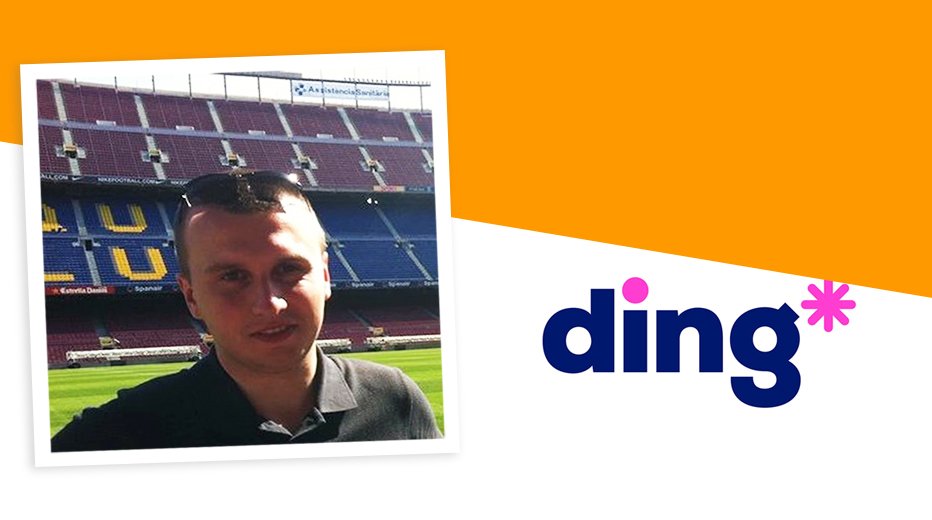
Norbert Malinowski an Infrastructure Core Systems Engineer with ding* talks about moving to work in Ireland and how e-Frontiers helped him during the process.
ding* is the largest top-up provider worldwide, enabling instant delivery of airtime to mobile phones anywhere in the world.
What is your role in ding*?
Infrastructure Core Systems Engineer.
What made this role appealing to you?
The diversity of the role in that it wasn’t a typical windows server role. One of the main motivations was the technologies being utilised and the opportunity to use new technologies. Also the fact that this is a fast paced agile environment.
Do you see a progression path emerging within this role
The scope to gain experience in different areas. The main area I work in is windows but I see the opportunities and scope to work with new technologies and ding allows this flexibility.
What advice would you have for graduates coming into this area of tech
To keep up with the technologies and continue to get industry recognized certifications.
Tell us a little about the culture in the company
It has a very good working environment with a friendly atmosphere and a great place to work. It’s multi-cultural with 150 people working in Dublin and a further 200 around the world.
What was your experience of dealing with our e-Frontiers recruiter
My initial contact with the recruiter was by phone as I lived in Poland at that time, we discussed what I was looking for. I found these meetings to be very useful and also found him to be very knowledgeable in this area. He matched my profile with the right job description. He knew exactly what I was looking for.
This made my decision easier about moving to and working in Ireland.
John Ryan, Senior Recruitment Consultant with e-Frontiers in conversation with Norbert Malinowski, Infrastructure Core Systems Engineer with ding*.
The difference between a Customer Success Manager and a Customer Support representative can often cause confusion as it can seem to be the same role as the main core to the role is to satisfy clients and customers with solutions and services. However, missions and requirements for these two roles are different but they are crucial to a business and should work well together to achieve success for their clients and company as well.
What do they do?
The role of a Customer Success Manager has a more proactive approach, providing continuous support to clients in order for them to achieve their business goals, whereas a Customer Support Representative, primarily supports inbound calls related to an issue or a problem.
As a Customer Success Manager, the aim is to create strong and long-lasting relationships with their clients and make them as successful as possible. The focus of a CSM is also to make sure they reach out to the client with any issues they are detecting, before the client reaches out to them with the problem, this way, they build trust and a strong relationship. KPI’s of a Customer Success Manager are mainly based on the positive influence on their clients’ purchases, retention rates or upsell rates.
Meanwhile, Customer Support Representative is often reached out by clients or customers firstly as he or she will be in charge of providing resolutions for products or services. Their main mission is to drive satisfaction and aim to maintain the relationships with their clients or customers. The speed and quality of support interactions are the metrics for a Customer Support Representative.
What are employers looking for?
Employers’ expectations for those roles are similar with excellent communication skills, good vision and positive attitude to satisfy their key clients or customers. They both must understand well about their company, products and services.
Recruiters often look for a Customer Success Manager with great experience, deep knowledge in their realm, relationship building skills and empathy. These skills are believed to be the key factor to reach a successful outcome and a long-lasting, proactive relationship between the parties involved.
The crucial skills of a good Customer Support Representative are patience, problem-solving and emotional intelligence skills to deal with issues or problems from clients or customers. Those personalities can help him or her overcome the challenges or obstacles which he or she is going to face every day. Positive motivation and trust are the bonus points for him or her to earn loyalty and maintain their relationships with their clients.
The choice of moving from permanent to contract working is becoming a popular option and has its benefits.
We have seen an increase of people moving from permanent to contracted working. This type of working can suit a range of careers including Business Analysts, Project Managers, Technical Support, Software Development and Database Analysts. Contracting offers more felixibility and can be a more lucrative option to permanent.
Here are three reasons why making the change to contracting can be a good option:
Flexibility
This can suit those that want to take some time out between contracts. Some for travelling or those with families taking time off during summer months, making this a good option for full-time working parents.
Lucrative
With different contracting options available you can decide whether having your own company or working under an umbrella company gives you more control over pay and benefits.
Using the Irish Euro tax calculator* will give you an approximation of your monthly take home pay.
* The calculator forms information from a third-party and should be used as a guide only. e-Frontiers are not responsible for the accuracy of the information within.
Exposure to variety of industry sectors
Working in a variety of industry sectors provides the contractor with building on their expertise and exposure to a wide choice of projects and technologies.
Contracting Options
Our guide provides information on options available for working as a contractor, whether you prefer to work as your own limited company or to work under an umbrella company.
Also included is information on our trusted financial partners who will guide you and take care of all your contracting needs.
Download our brochure to find out more.

Contact one of our recruitment consultants for all contracting jobs.
Trish Lynch specialises in Project Managers, Business Analysts, Test Analysts, Test leads, Test managers, Java and Technical Architects.
Anca Antonica Database Development, Test Automation, .Net and Front-end.
John Ryan specialises in System Support, Security Consultants, Virtualisation Specialists, Infrastructure Consultants, Cloud Automation Specialists
Alexandra Pop Contractor and Customer Success Manager
Estamos asistiendo a una situación sin precedentes. Debido a la falta de demanda, de la noche a la mañana hemos visto como determinados sectores están colapsando y con ello la imposibilidad de retener el talento en esas empresas. Muchas organizaciones tienen miedo de afrontar nuevas contrataciones y, mientras esperan la llegada de tiempos mejores, sus competidores se adelantan y se atreven a invertir en ese talento ahora sin proyecto.
Un ejemplo de ello nos lo ofrece HP a finales de los años 40. Tras la segunda guerra mundial, su negocio decayó al mismo tiempo que numerosos ingenieros que trabajaban en la industria militar se quedaron en la calle. No se lo pensaron dos veces y aprovecharon la situación para la incorporar ese talento a sus filas, lo que les ayudó a crecer en los años venideros y convertirse en una de las mayores empresas del mundo. Esto fue posible debido principalmente a dos factores: porque podían y porque se atrevieron. Actualmente, por desgracia no todas las empresas pueden. Pero las que si tienen esa posibilidad de invertir en talento, depende exclusivamente de ellas decidir si salir de la crisis por delante de sus competidores o no.
Por otro lado, por parte de los candidatos que cuentan con trabajo estable existe cierta incertidumbre a la hora de buscar una nueva oportunidad. Si hace unos meses eran más proclives a aceptar una oferta interesante, ahora muchos prefieren mantenerse en su puesto aunque no cumpla con sus expectativas. Es especialmente importante en estos casos mostrar un proyecto consolidado, con un desarrollo profesional claro y eliminando todos los obstáculos innecesarios del proceso de selección.
Y vosotros que pensáis, ¿es un un buen momento para invertir en el futuro con nuevo talento y para redefinir los procesos de selección?
Spanish team
June 2020
Hemos detectado la dificultad de muchos candidatos para superar las entrevistas de selección, ya sea porque el CV no es adecuado, no saben como buscar empleo o cometen errores imperdonables en sus entrevistas. Por aquí os dejamos algunos tips que os ayudarán a tener éxito en vuestros procesos
¿Cuáles son los tips básicos para la creación de un CV atractivo?
Creo que la creatividad y ser uno mismo en la clave para darle personalidad a un CV. A mi no me gusta dar tips de lo que hay que hacer para no sesgar la parte de «ser uno mismo», pero si me gusta comentar lo que no hay que hacer. Por ejemplo, incluir demasiados detalles personales como DNI, estado civil, la dirección de casa… los considero aspectos privados, no relevantes y que ocupan espacio. Extendernos demasiado en el CV, genera cierta pesadez en la persona que lo tiene que leer, 2 – 3 páginas (a lo sumo, si tienes más de veinte años de experiencia), podría valer. Para experiencias laborales muy antiguas, no es necesario extendernos porque ya han dejado de ser relevantes y en el mundo IT las tecnologías van a estar obsoletas. A nivel general, no debemos perder de vista aspectos importantes como la claridad, la buena impresión de conjunto y evitar incluir demasiados colores o imágenes para no desviar la atención.
¿Cuáles crees que son los errores más comunes que un candidato suele cometer en el proceso de selección?

Un comentario frecuente con el que nos encontramos es que los candidatos hace más referencia a lo que no saben (por miedo o inseguridad) que a todo lo que pueden aportar al puesto de trabajo. Otro error frecuente es no ser concisos en las respuestas. El hecho de querer contar mucha información hace que finalmente no se responda a lo que se pregunta.
Si tuvieras que darle un consejo a alguien que va a realizar su primera entrevista, ¿qué le dirías?
Suena a tópico pero lo primero es tranquilizarse, respirar hondo y pensar que todo va a salir bien. Si le transmitimos a nuestro cerebro mensajes como: «me va a salir mal», «no se que decir», «no soy capaz», ¿cómo van a ser tus respuestas? Negativas, poco acertadas e inseguras; todo lo contrario a nuestro propósito. Por tanto, considero imprescindible afrontar el reto con una actitud positiva, segura y siendo conscientes de que de podemos hacer y además, hacerlo bien.
Bajo tu punto de vista, ¿cuáles son los puntos clave para garantizar el éxito en un proceso de selección?
Un proceso de selección puede constar de varias entrevistas y puede ser largo y tedioso. Creo que la clave está en ser paciente, preparar cada una de las entrevistas y mostrarse flexible durante todo el proceso. Con esto último me refiero a facilitar llegar a un acuerdo para agendar una entrevista, por ejemplo. Estas suelen ser en horarios cuando los candidatos tienen obligaciones (laborales o familiares) y es frecuente una respuesta de: «no puedo a esa hora y ese día» y esperan a que el entrevistador vuelva a ofrecer una nueva fecha y hora para, probablemente, dar la misma respuesta. Esa actitud da mucha sensación de falta de interés que no beneficia a ser el candidato elegido.

¿Qué crees que es aquello que en una primera entrevista puede hacer al candidato marcar la diferencia respecto al resto?
Creo que la clave está preparar un guión de lo que quieres hablar, haberlo practicado (un par de veces delante del espejo) para que no se olvide nada y ser conciso en las respuestas; saber escuchar también es fundamental, muchas veces los nervios juegan malas pasadas. La persona que tenemos enfrente lo único que quiere es conocernos y ver si nuestras habilidades hacen match con el puesto, no hay que tener miedo, ¡tomémoslo como una charla con un amigo al que acabamos de conocer!
June 2020
Virginia Dueñas
Don’t you believe that the information you leave behind on the internet could help you make a great move in your career. Some employers and recruiters prefer to target your digital footprint during the hiring process, especially in the offer decision. In the technology era, your online activities could be a part of the first impressions for your network.
Pros and Cons of your digital footprint
Your online portfolio is more attractive to recruiters and employers than your CV as it tells us more about yourself. Besides your working timeline and achievements, your virtual profile also reveals your practical experience, sided projects, visible research and wide knowledge. We can base on that information to connect you with big companies, offer you your dream job or support you to reach a higher level in your career.
However, your cyber footprint can be a double-edged knife for your career. Be aware that some of your posts may stay on the internet permanently and the others can approach them from a simple search on the browser. Therefore, you should think carefully before sharing something with your network.
How to improve your digital footprint
On point of view, you can take advantages of the benefits of the virtual world to build up your personal brand as an expert in your realm. Joining the forum to discuss or share your experience or knowledge will help you expend not only your networking but also your career opportunity. I am sure that it will be a big competitive advantage for you to stand out among the talent pool.
It’s an ideal idea If you want to change your profession, it’s an ideal idea to post your research your projects on the new realm to prove your ability. I have heard some stories of successful changing profession from my candidates. You can be the next one.
What do you think? Share with me your opinions.
February 2020
Cristina Rafael

“FAIL TO PREPARE,
PREPARE TO FAIL”
e-Frontiers highly recommends that you use the time prior to the interview wisely. Interview preparation is essential and must be taken seriously. Some people we engage with spend up to 10 hours preparing. Based on our research, candidates who prepare well in advance of the interview, increase their chances of success by up to 30%. Regardless of the type of interview, you are about to have; behavioural, experience or competency-based, e-Frontiers recommends that you use the following approach.
What do you know about the company?
Interviewer: What do you know about our company?
Interviewee: You are a software solutions provider.
(Silence)
Outcome: Rejection
The above is possibly the worst answer you can give to a HR or hiring manager. Sometimes they may be insulted or this can be a moment of embarrassment for you. Ensure this doesn’t happen. It is a competitive IT jobs market, and when you are seeking a new job, most of the time you will have a few options. The client also has options. Stand out from the competition by researching the company.
With the first step in your interview preparation, e-Frontiers suggests you write down 20 facts about the company you are meeting. Depending on the company (i.e. a Multi-national or a Stealth-mode Start-up), the information available may vary.
There are many resources for information such as their website, Google News, Silicon Republic, LinkedIn, your e-Frontiers Recruiter, etc. If you find it difficult to obtain information, this will allow you to start creating questions to ask the interviewers.
For Skype, Hangouts and phone interviews, you can have these points sitting in front of you.
If it is a face to face interview, re-read these points just before it begins.
Tell us about you
The next essential tip in your interview preparation that e-Frontiers advise is that you write out your experience where it correlates to the job description. What on your CV relates to this job? When asked to go through your experience at the interview you should primarily focus on matching you to the job. Don’t be too rigid either. You are likely to possess skills and experience that go beyond the job description and can add further value. Employers want this added value. They know you can do this job but what sets you apart from the competition?
For competency-based interviews, link your experience to their competencies.
The position
The next objective in your interview preparation is to re-write the job description in your own words. What do you think this job is and what do you know about it? This will allow you to relate the role to your experience and skills.
Your motivation
One of the most important areas in your interview preparation, and why you are even considering looking for a new role is to write down your motivations for this job. Why do you want this job? We suggest you aim for 10 motivations. Step 1, 2 and 3 should help construct these motivations. Financial motivations are fine but they need to be low down your list. Your e-Frontiers Recruiter will be discussing these in initial engagements.
Post-Interview – Their perception of you
Following the interview, over the coming days, the interviewers will be discussing your performance. The final step for your interview preparation that e-Frontiers recommends, is for you to write out in 5 – 10 lines what you want them to say about you. This will create a framework that will guide, shape and direct your interview.
Why is interview preparation important?
- You will know the company’s background in greater detail.
- You will thoroughly understand the job.
- The employer will understand your fit for the role much better.
- The employer will be impressed by your level of preparation.
- The employer will know that you are motivated for this.
- Interview preparation will increase your chances of success by up to 30%.
Final checklist in my interview preparation
- For onsite interviews, plan your journey to their office. Aim to be 15 minutes early. Not more than this and certainly not late.
- If you have progressed following the 1st interview, revise the questions you were asked, especially any you struggled with. Have you been proactive and researched that area of weakness?
- Research the interviewers beforehand. Google them or check them on LinkedIn. It’s a great way to strike up a conversation and build rapport.
- Do you know anyone working there? They can give you further insight into the company, role, culture, etc.
- Have questions prepared for the interview. This is the best opportunity to access primary information about the role, people, etc.
- Positivity, enthusiasm, interest and energy are essential ingredients to successful interviews.
- Look smart. After all this is an interview.
AND FINALLY
We wish you the best of luck in your interview.
August 2019
Are you wondering whether you should make a job change or not? Stay calm and go through the 5 basic questions before you decide to change job.
1. Are you happy with your job?
“Do what you love and you’ll never work another day in your life”. If you are not happy with your current job, ask yourself what you expect in the next opportunity. It’s not good if you just look for a short-term escape which will bring unhappiness for you again. Give yourself some reasonable motivations for a job change such as a new experience, a higher position or promotion opportunities.
2. What are your skills?
Do you have the feeling of being stuck in the same position in your current job? There is likely a problem which you should figure out before you change job. It is better to really understand your capability and capacity and whether it matches your dream job. It is never too late for you to upgrade your level and learn new skills to become a qualified candidate for a new position.

3. Do you have work-life balance?
Do you have it in your current job or are you looking for it when you change jobs? The contentment in both your work and private life is important and drives you to success. Separating your work and your personal life will help you work productively and have a healthy lifestyle. You should ask some questions about company culture and work-life balance. Planning each work day in advance and focusing when you come in will help you be more productive at work. Leave work in the office behind you and enjoy the contentment in your personal life.
4. Are you ready to get out of your comfort zone?
Think about new challenges you will face when you make a job change decision which will force you out of your comfort zone. Stepping out of your comfort zone can be a little daunting but can have huge benefits. Learning something new and improving your skills will give you a sense of satisfaction and achievement and may give you a different outlook on your current job or look towards a different direction.

5. What is your plan for a job change?
No one can answer this question better than you. Who do you want to be in the future? What do you want to achieve in your career path? What is the working environment like? Is salary the most important to you in your career? You should consider your value before making the move.
March 2019